
Have you ever experienced a sudden wave of overwhelming fear that seems to come out of nowhere? Perhaps your heart starts racing, your breathing becomes difficult, your chest feels tight, or you experience a terrifying sensation that something dreadful is about to happen.
If so, you may have experienced a panic attack.
Panic attacks can be frightening, particularly when you don’t understand what’s happening to your body. The good news is that there are practical techniques you can use to manage a panic attack, reduce its intensity and regain control.
In this article, we’ll explore 10 effective ways to deal with a panic attack, including breathing techniques, grounding exercises and simple psychological strategies that can help you regain a sense of calm.
Most importantly, you’ll learn why panic attacks happen and how you can stop being afraid of them.
What Is a Panic Attack?
A panic attack is an intense episode of fear or discomfort that develops suddenly, often reaching its peak within minutes.
During an attack, your body’s natural fight-or-flight response becomes activated. This is the same biological response designed to protect you when you face danger.
The problem is that during a panic attack, your brain can trigger this response even when there is no genuine physical threat.
Common symptoms include:
- Racing or pounding heartbeat.
- Shortness of breath or feeling unable to get enough air.
- Chest tightness or discomfort.
- Dizziness or light-headedness.
- Sweating or trembling.
- Nausea or stomach discomfort.
- Feeling detached from yourself or your surroundings.
- Fear of losing control, dying or something terrible happening.
Although these symptoms can feel extremely alarming, panic attacks themselves are not usually physically dangerous.
However, new, severe or unusual symptoms should never automatically be assumed to be anxiety. Seek urgent medical assessment if you are unsure, particularly with chest pain or significant breathing difficulties.
10 Ways to Stop a Panic Attack
The next time you feel panic building, try the following techniques. You don’t need to use all ten. Experiment to discover which techniques work best for you.
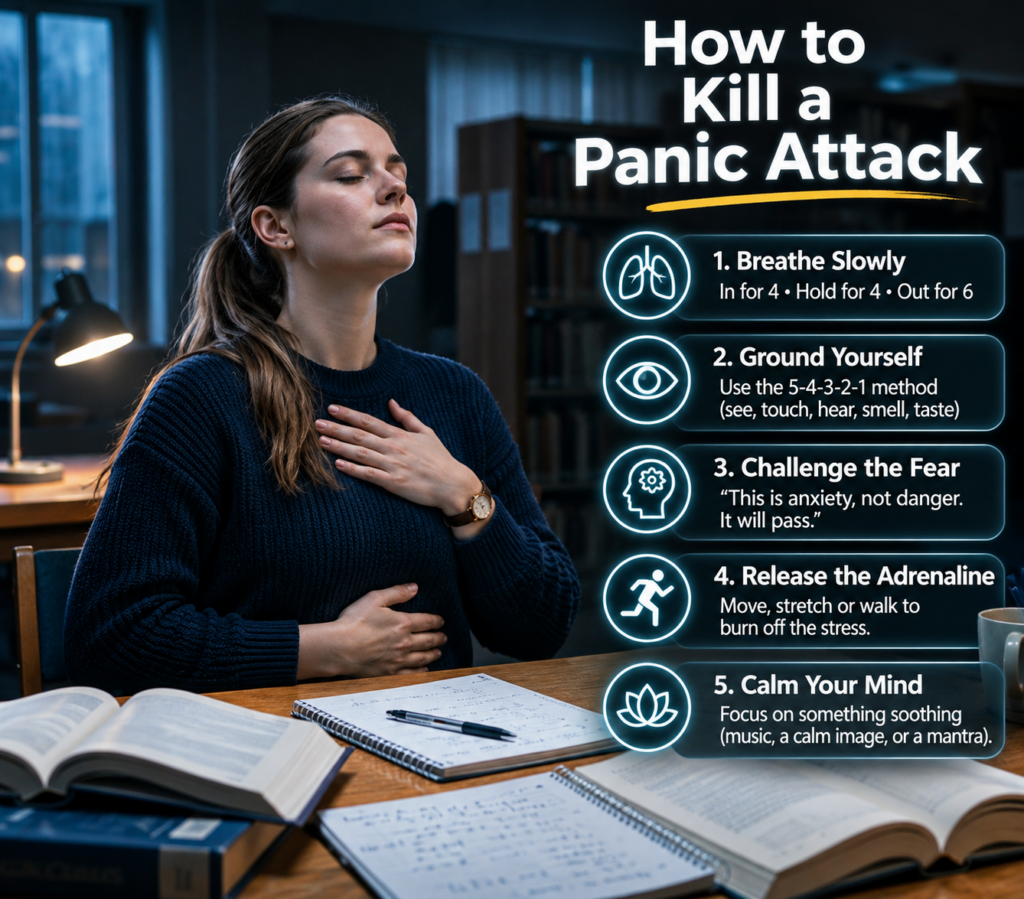
1. Control Your Breathing
One of the first things to do when experiencing a panic attack is to pay attention to your breathing.
When anxiety takes hold, you may start breathing rapidly or taking shallow breaths. This can contribute to symptoms such as dizziness, tingling and feelings of breathlessness.
Try slowing your breathing down.
A simple technique is:
- Breathe gently in through your nose.
- Breathe out slowly through your mouth.
- Allow your breathing to settle into a comfortable rhythm.
- Repeat without forcing deep breaths.
Try making your exhalation slightly longer than your inhalation if that feels comfortable.
Don’t worry about achieving perfect breathing. The objective is to breathe gently and naturally rather than fighting your symptoms.
2. Remind Yourself That You Are Not in Danger
During a panic attack, your mind can convince you that something terrible is happening.
You might think you’re having a heart attack, losing control or about to collapse.
These thoughts can intensify the fear, creating a vicious cycle.
Instead, try repeating a reassuring statement:
“This is a panic response. My body is reacting to fear. I don’t need to fight it. This feeling will pass.”
Reminding yourself that panic is a temporary experience can help reduce the fear surrounding the physical sensations.
Remember, though, that unfamiliar or concerning physical symptoms deserve medical attention rather than automatic reassurance.
3. Stop Fighting the Panic Attack
This might sound counterintuitive, but constantly trying to fight a panic attack can sometimes make it worse.
When you notice panic developing, your instinct may be to escape, resist the sensations or desperately try to make them disappear.
Unfortunately, this can reinforce the belief that the sensations are dangerous.
Instead, try allowing the sensations to be present without struggling against them.
Think of panic as a wave. It rises, reaches its peak and eventually subsides.
You don’t have to defeat the wave. You simply need to let it pass.
4. Use the 5-4-3-2-1 Grounding Technique
A panic attack can make you feel disconnected from your surroundings.
Grounding techniques help bring your attention away from frightening thoughts and back into the present moment.
Try the 5-4-3-2-1 exercise:
- 5 things you can see: Look around and identify five objects.
- 4 things you can feel: Notice the sensation of your feet on the floor or your hands touching your clothes.
- 3 things you can hear: Listen for sounds around you.
- 2 things you can smell: Notice two different scents.
- 1 thing you can taste: Focus on a taste in your mouth.
Take your time with each step.
This exercise gives your mind something practical to concentrate on instead of continually monitoring your anxiety symptoms.
5. Don’t Run Away From Every Situation
When panic attacks occur in particular places, you may start avoiding those environments.
For example, you might avoid supermarkets, public transport, shopping centres or driving.
Although avoiding these situations can provide temporary relief, it can strengthen your fear over time.
Gradually facing situations you have become afraid of can help you rebuild confidence.
This is known as exposure, and it is an important part of cognitive behavioural therapy (CBT) for panic and anxiety.
Start with manageable steps rather than forcing yourself into overwhelming situations. A qualified therapist can help you develop a structured approach.
6. Relax Your Muscles
Anxiety can cause your muscles to become tense, particularly around your shoulders, neck, jaw and chest.
Try deliberately releasing some of this tension.
For example:
- Drop your shoulders.
- Unclench your jaw.
- Relax your hands.
- Allow your stomach muscles to soften.
- Let your body rest comfortably.
You can also try progressive muscle relaxation, which involves gently tensing and relaxing different muscle groups.
The purpose is to help your body move away from its heightened state of tension.
7. Stop Checking Your Symptoms
When experiencing panic, you might repeatedly check your heartbeat, monitor your breathing or look for signs that something is wrong.
This is understandable, but constantly monitoring your body can keep your attention focused on the sensations that frighten you.
Instead, once you’ve established that you are safe and don’t need medical assistance, try redirecting your attention.
You could:
- Listen to some calming music.
- Watch something familiar.
- Have a conversation with someone.
- Focus on a simple everyday activity.
The aim is not to ignore genuine medical symptoms, but to avoid repeatedly checking ordinary anxiety sensations for signs of danger.
8. Change the Way You Think About Panic
Your interpretation of panic symptoms can have a significant influence on how frightening they become.
For example, imagine your heart suddenly starts racing.
You might interpret this as:
“My heart is beating too quickly. Something terrible is happening.”
This interpretation increases your fear, which can trigger further physical sensations.
Instead, try a more balanced interpretation:
“My body has activated its fight-or-flight response. This is uncomfortable, but I can manage it.”
This is an important principle of CBT: learning to recognise and challenge unhelpful thinking patterns.
Over time, changing your relationship with anxious thoughts can help reduce the intensity of panic.
9. Find a Comfortable Place and Give Yourself Time
If possible, move somewhere you feel comfortable and can sit down safely.
You don’t need to rush around trying different techniques or desperately find a way to make the sensations disappear.
Give yourself permission to pause.
Focus on your breathing, relax your body and remind yourself that panic symptoms usually peak and then begin to subside.
Avoid using alcohol or recreational drugs to try to control panic. These can make anxiety worse.
10. Practise Relaxation When You Aren’t Having a Panic Attack
One of the biggest mistakes people make is only practising anxiety-management techniques when they are already experiencing panic.
It’s much better to develop these skills when you are feeling relatively calm.
Consider spending 5–10 minutes each day practising:
- Gentle breathing exercises.
- Mindfulness.
- Progressive muscle relaxation.
- Meditation.
- Grounding exercises.
The more familiar these techniques become, the easier they may be to use when anxiety starts to build.
How Long Does a Panic Attack Last?
Most panic attacks reach their peak within minutes, although the overall experience can last longer.
You may also feel exhausted, shaky or unsettled after an attack has passed.
It’s important to remember that you don’t need to make the panic disappear instantly.
Instead, concentrate on reducing the fear surrounding the experience and allowing your body time to settle.
Why Do Panic Attacks Keep Happening?
If you’ve experienced one panic attack, you may become frightened of experiencing another.
This can create a cycle known as the fear of fear.
Here’s how it works:
- You experience a panic attack.
- You become frightened of the physical sensations.
- You start monitoring your body for signs of another attack.
- You interpret normal bodily sensations as potential danger.
- Your anxiety increases.
- The increased anxiety can trigger another panic attack.
Breaking this cycle is an important part of overcoming panic disorder.
Rather than simply trying to eliminate every anxious sensation, you need to learn that experiencing anxiety does not automatically mean you are in danger.
CBT is an evidence-based treatment that can help people understand and change this cycle.
If panic attacks are recurring, affecting your everyday life or causing you to avoid activities, speak to your GP or a qualified mental health professional. Effective treatments are available.
Can You Completely Stop Having Panic Attacks?
Yes, many people find that their panic attacks become less frequent, less intense or stop altogether with appropriate treatment and practice.
However, there isn’t a magic switch that works for everyone.
The most effective long-term approach often involves understanding what triggers your anxiety, changing unhelpful thinking patterns, gradually confronting situations you fear and learning practical relaxation techniques.
The important thing is not to judge yourself if you experience another panic attack.
Recovery is a process, and setbacks don’t mean you’ve failed.
Final Thoughts: You Can Take Back Control
Panic attacks can be terrifying, especially when you don’t understand why your body is reacting in